

What is a youth budget?
A participation process in which young people vote on a real municipal budget, and visibly change their town.
Real money, real decisions
A youth budget is a fixed amount from a municipality's budget. It is not the council or the administration that decides how it is spent, but the young people who live there.
The municipality provides the money
The amount is part of the town's budget, approved by the council and reserved for young people's ideas. Often there is co-funding on top: foundations, local businesses or state and federal programmes add something.
Young people decide
They submit the ideas, work them out into feasible projects together with the administration and finally vote on them. The result is binding: what wins gets built.
We focus on shaping the city
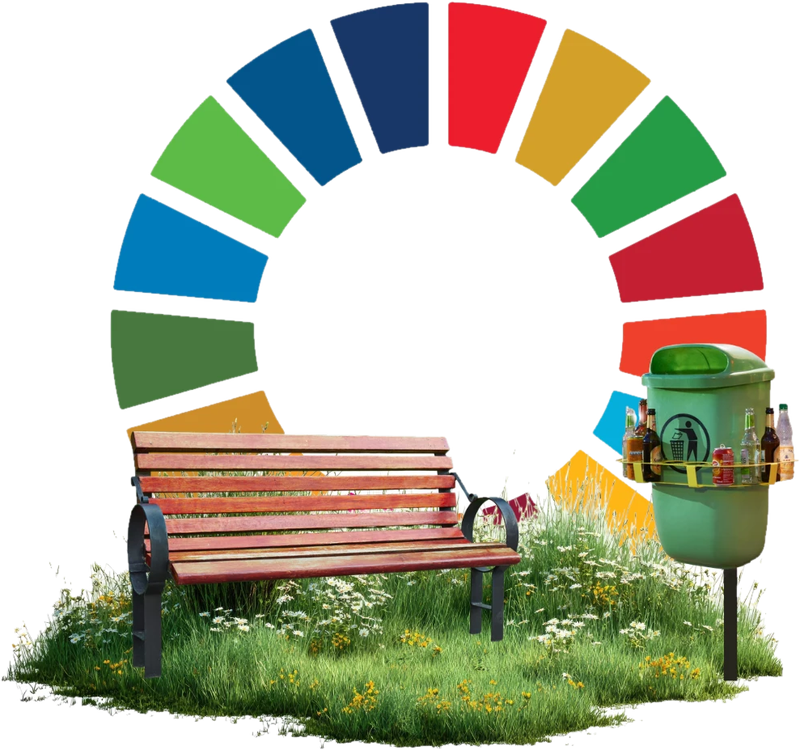
Our focus is deliberately on public space: squares, paths, meeting points, green areas. Self-efficacy is hard to explain. A place you voted for yourself explains it on its own.
The process in four phases
It takes around two years from the first idea to the opening. YLCG accompanies the municipality all the way; the decisions are made by the young people.
01
Call for ideas
All young people are invited to contribute ideas for a nicer, fairer, more sustainable place. For their neighbourhood or the whole city, on city walks, in youth centres, at school and online.
02
Developing concepts
Together with the administration, the ideas become feasible and affordable concepts. Participants learn how a city actually works: what a cost estimate is, which department is responsible, why some things take longer.
03
Voting
All young people in the area may vote, digitally or on paper. One vote per person, regardless of passport, type of school or how long they have lived there.
04
Implementation
The chosen projects are built with municipal funds, sometimes co-financed. In the end there is something that lasts and belongs to the city.

Which ideas get built
There are no limits to imagination, anything can be submitted. Which ideas get built is decided by all young people in the municipality together, in a democratic vote. On the ballot are the ideas that meet three conditions:
- They contribute to one of the 17 Sustainable Development Goals of the United Nations.
- They benefit the community.
- They are in line with basic democratic values.
Places that show youth budgets work
Youth budgets are not an experiment with an open outcome. These cities have been running them for years, with fixed amounts and binding votes.
jacob Licht / Unsplash
1 Mio. $
per year
- Boston, USA
Youth Lead the Change Boston
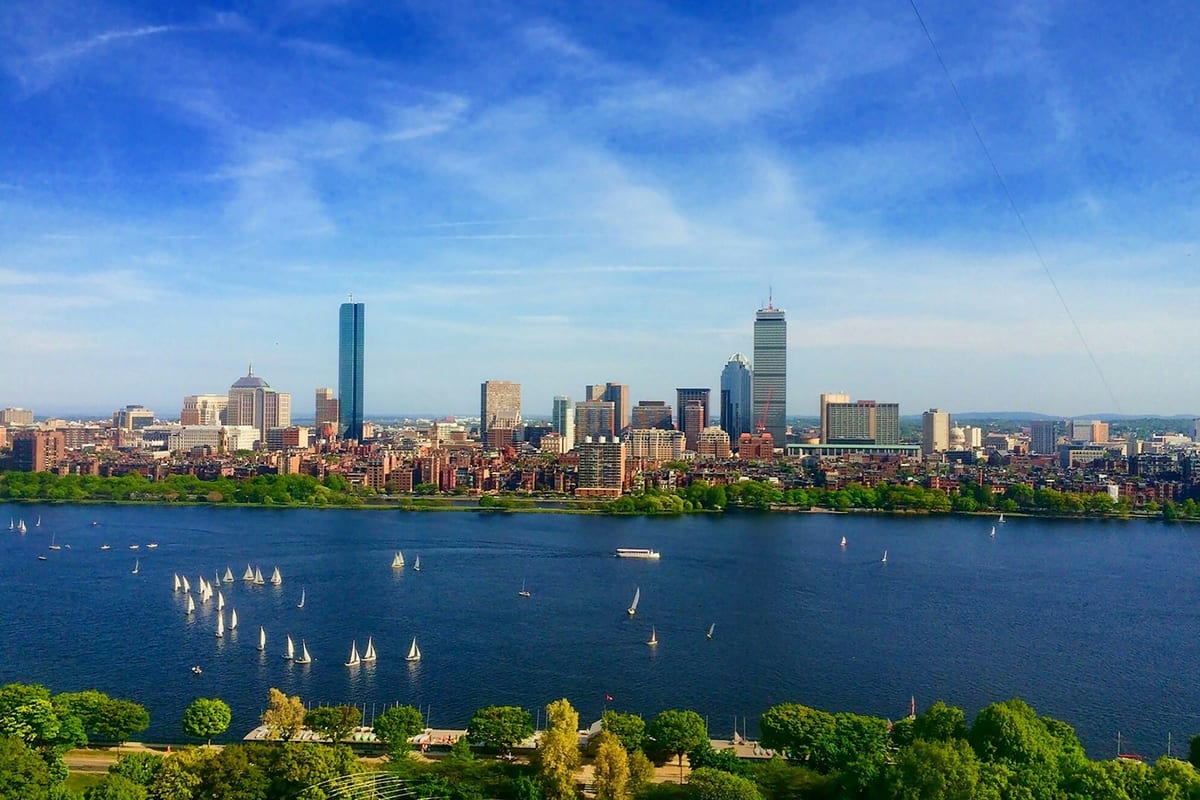
The first youth budget of its kind in the United States. Since 2014, young people have decided every year on one million US dollars from the city budget. They submit ideas, develop them and vote. Results include water fountains, solar benches and tablets for schools. This is where we brought the concept from.
City of Boston
Jacek Dylag / Unsplash
1 Mio. €
per round
- Vienna, Austria
Kinder- und Jugendmillion
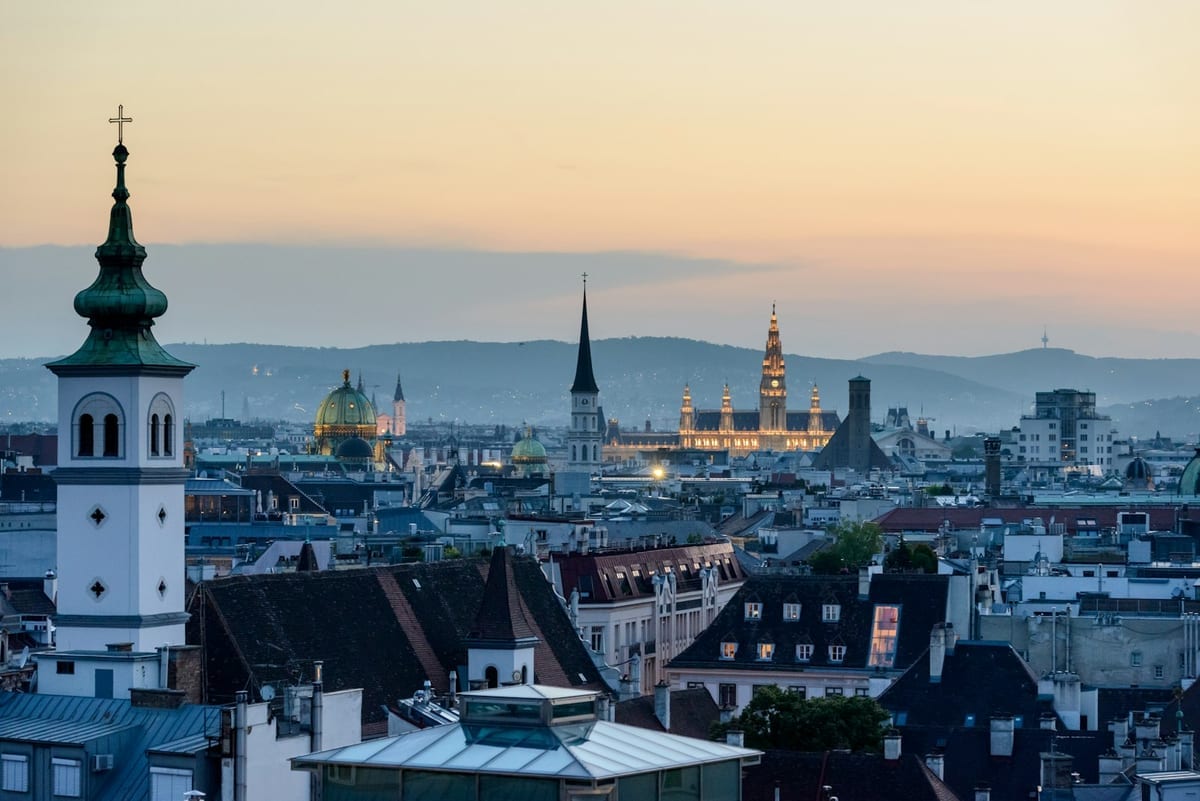
Vienna reserves one million euros of the city budget for ideas from children and young people. Everyone aged 5 to 20 may vote. Over two rounds, more than 440 ideas came in and 30 won the vote, including a wheelchair and bicycle park and free swimming lessons.
Stadt Wien, Kinder- und Jugendstrategie
Yoursmile / Wikimedia Commons, CC0
100.000 €
every two years
- Werder (Havel)
Zukunftshaushalt
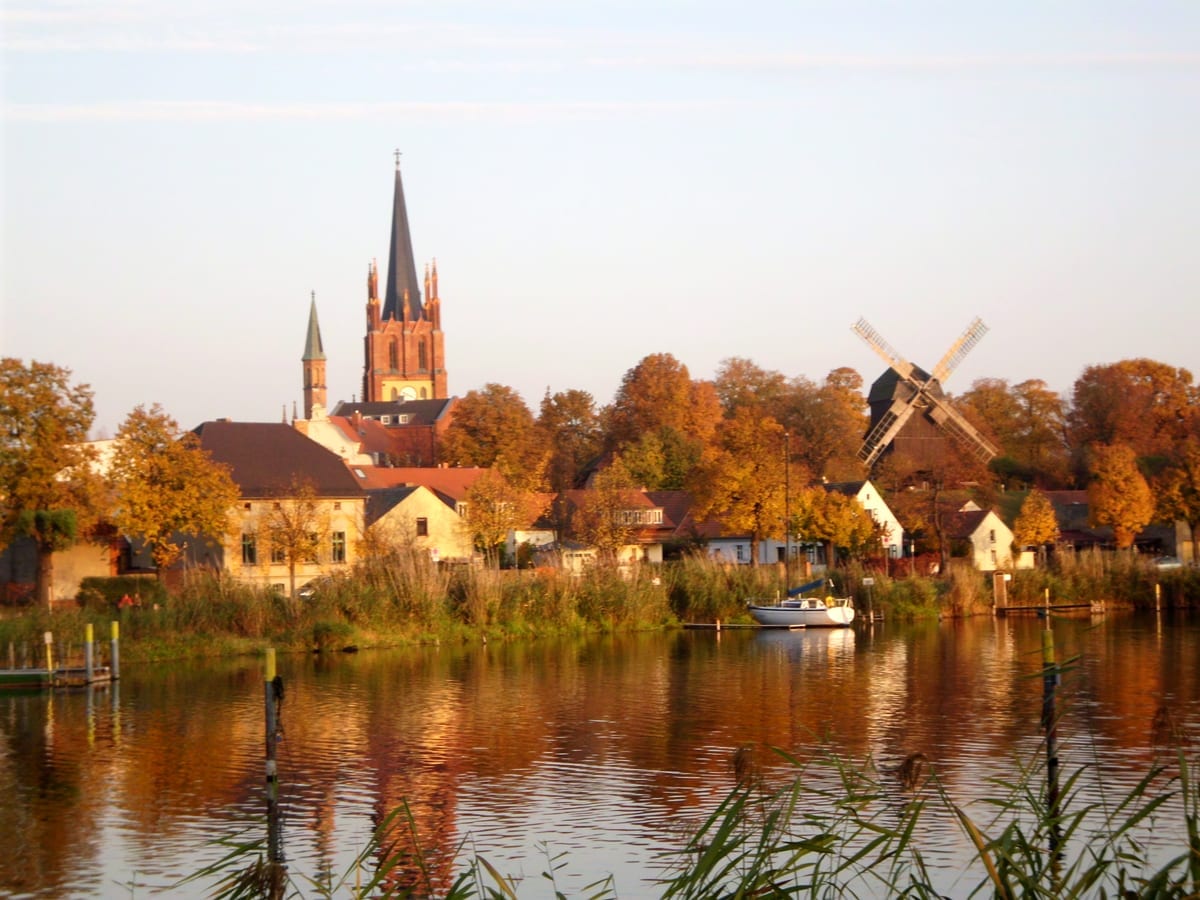
The whole town may submit proposals, but young people decide: voting takes place at schools from year four, and the result is binding. A future council of 12- to 18-year-olds, drawn by lot from the population register, prepares the vote. In 2024/25 the future budget ran for the third time.
Stadt Werder (Havel), Brandenburg


Where else young people decide about money
The principle works at every level, in a single school as well as at state and federal level. Sometimes it is enough to open an existing citizens' budget to young people.
We work at municipal level. We speak of a youth budget when young people from the whole municipality get their own budget and everyone can vote on it. If only a council or committee decides, that is valuable participation too, but not a youth budget in our sense.
up to €5,000
per school
- School
- Berlin and Brandenburg
Schüler*innenHaushalt
The same idea on a small scale: a school receives a fixed budget of between 1,000 and 5,000 euros, depending on the district. Students collect ideas, organise the vote themselves and carry out what wins. In Berlin since 2015, in Brandenburg since 2022.
Servicestelle Jugendbeteiligung
1 Mio. €
state youth budget
- State
- Free State of Bavaria
#ideenfürdiejugend
As part of its youth action plan, the Bavarian Ministry of Social Affairs provided a youth budget of one million euros. Young people aged 16 to 27 developed their projects at a hackathon and pitched them to a jury that included young people. 21 projects were funded.
Bayerisches Staatsministerium für Familie, Arbeit und Soziales mit dem Bayerischen Jugendring
1 Mio. €
federal youth budget
- Federal
- Nationwide
Jugend-Budget
The same process one level up: the Federal Youth Ministry provided one million euros. A youth jury chose 30 of more than 60 submitted ideas, then around 2,600 young people aged 12 to 27 voted online on which ten projects would be carried out. Up to 100,000 euros per project.
Bundesministerium für Familie, Senioren, Frauen und Jugend
160.000 €
citizens' budgets in Potsdam, 2024/25
- Citizens' budget
- Brandenburg
Jugendbeteiligung bei Bürgerbudgets
Not a separate youth budget, but an existing one opened up: in Eberswalde, Potsdam and Nuthetal, 16- to 26-year-olds could submit their own proposals to their municipality's citizens' budget and help decide. Potsdam divides its 160,000 euros into eight citizens' budgets, one of them a youth budget of 20,000 euros for everyone up to 21. The JuBu project ran from 2020 to 2024.
mitMachen e. V. Potsdam, gefördert von Demokratie leben! und der Robert Bosch Stiftung
130.000 €
per year, across all locations
- Advisory council
- 14 locations
CHILDREN Kinderbeirat
Here 8- to 18-year-olds decide themselves on funding for children's projects: around 5,000 euros per session, at most 1,500 euros per application. Twice a year a council meets and chooses from five to seven applications. Around 140 young people get about 130 projects off the ground every year. Munich was the first, in 1994.
CHILDREN e. V., meist gemeinsam mit örtlichen Bürgerstiftungen
Frequently asked questions
Where does the money come from?
From the municipal budget. The municipality approves a fixed amount that is available exclusively for young people's ideas. Often there is co-funding, for example from foundations, local businesses or state and federal programmes. Supporting the process is funded separately.
Is it also called a youth household?
In German there are many names: Jugendbudget, Jugendhaushalt, Zukunftshaushalt, Jugendmillion. They all mean a participatory process in which young people vote on a real budget. The name differs from town to town, the principle is the same.
Who is it for?
For young people. The main target group of our youth budgets is 14 to 21 years old; some projects also include younger children and young adults. In Cologne-Nippes, the change agents were between 12 and 28.
What can ideas look like?
Very different. It doesn't matter whether it is a sudden idea or something already worked out. In Cologne the results included a meeting bench, a table tennis table, a youth shelter, a pull-up bar and more trees. In Boston, our model, they were water fountains, solar benches and tablets for schools.
What does the municipality gain?
Municipalities get a tried and tested process they can run themselves permanently. It is open to all young people locally, not only those already active in committees. The money goes where young people need it, and young people experience that their voice counts.
What does YLCG do?
We support the process: with people on site, with tested formats and workshop concepts, and with the preparation: identifying the relevant actors, securing political support, securing funding. Our goal is that the municipality can do it on its own afterwards.
Who are change agents?
Young people who live, go to school or spend their free time in the district and take on a special role in the process: they inform others, answer questions and connect the administration, politics and young people. In Cologne-Nippes there were 17.
Your question wasn't answered? Write to us.
A youth budget in your municipality?
We support municipalities from the first idea to the impact report.
